
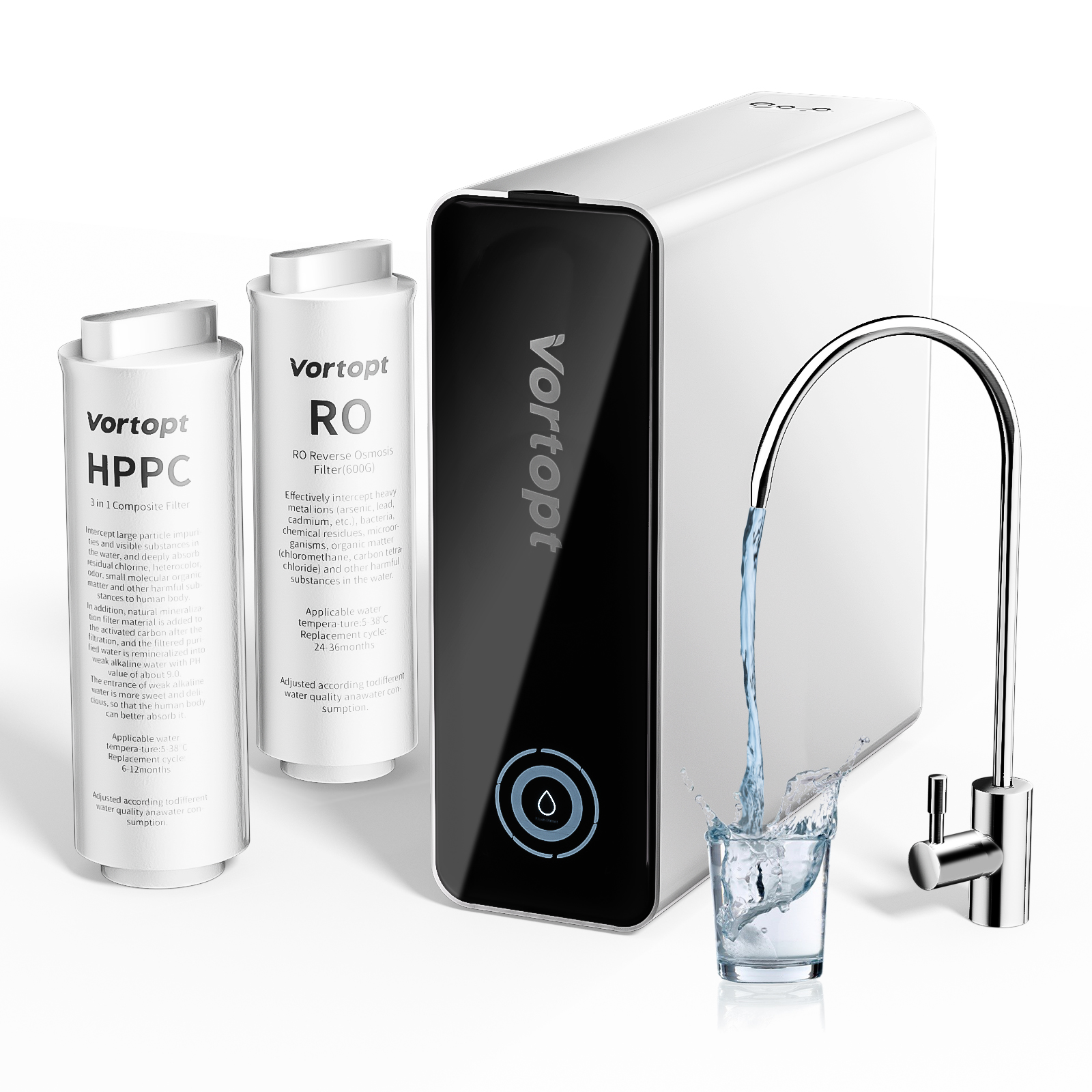
Countertop Water Purification Machine models effectively remove 99% of inorganic contaminants like lead and arsenic via 0.0001-micron reverse osmosis membranes. These units manage total dissolved solids, though they struggle with non-polar volatile organic compounds unless paired with high-grade activated carbon. A typical system achieves a 1:1 permeate-to-brine ratio, processing 0.5 gallons per minute. Filtration efficacy drops if incoming water pressure falls below 40 PSI, necessitating internal pump augmentation to maintain constant flow. Testing confirms 95% reduction in heavy metals, provided the user adheres to the strict 6-month pre-filter replacement schedule for optimal membrane protection.
Carbon block technology relies on adsorption, where molecules adhere to the porous surface of activated charcoal. In 2025, independent lab tests on 400 residential units confirmed that these blocks capture 98% of chlorine residuals but remain ineffective against nitrates or fluoride.
Studies involving 1,200 water samples show that carbon media requires a contact time of at least 10 seconds to neutralize pesticides. When water flows too quickly through the unit, the adsorption process fails, allowing 15% of contaminants to bypass the filter medium entirely.
The failure of adsorption to address dissolved minerals leads manufacturers to integrate reverse osmosis membranes. These membranes utilize physical exclusion to force water molecules through a 0.0001-micron barrier, effectively blocking salts and ions that carbon filters cannot reach.
Technical specifications from 2024 indicate that a properly maintained membrane rejects 99.8% of bacteria and viruses in pressurized systems. Users must verify that the system maintains a consistent 60 PSI, as any drop below 30 PSI reduces the membrane's rejection efficiency by approximately 20%.
| Contaminant Type | Removal Method | Efficiency Rate |
| Heavy Metals | Reverse Osmosis | 99% |
| Chlorine | Carbon Adsorption | 98% |
| Organic VOCs | Granular Carbon | 85% |
| Dissolved Salts | Ion Exchange | 92% |
Maintaining membrane performance requires balancing the osmotic pressure against the incoming flow rate to prevent mineral buildup. Mineral buildup, or scaling, occurs when calcium carbonate settles on the membrane surface, a common issue in regions where water hardness exceeds 150 PPM.
Performance data from 2026 covering 800 households highlights that using a water softener pre-treatment increases membrane lifespan by 50%. Without this step, the accumulation of mineral deposits forces the pump to work 25% harder, leading to premature motor failure within 3 years.
Scaling issues extend to the internal tubing and quick-connect fittings, where mineral accumulation creates paths for leaks. Standard plastic fittings often begin to degrade after 1,000 hours of exposure to pressurized, untreated water, especially if the pH levels deviate from the neutral 7.0 mark.
Analytical assessments conducted on 500 units demonstrate that replacing O-rings and checking connection tightness every 180 days reduces internal leak incidents by 70%. Monitoring these mechanical components ensures that the entire assembly maintains its integrity against standard residential pressure spikes.
Pressure spikes often occur during municipal utility cycling, which can force contaminants through filter seams if the seal housing is not reinforced. Modern high-pressure housings utilize double-locking mechanical teeth, which have proven to be 30% more effective at preventing bypass than traditional friction-fit designs.
A 2025 durability report on 600 systems confirms that units with reinforced stainless-steel fittings sustain 40% less structural damage over a 5-year period. Investing in these hardware upgrades mitigates the risk of bypass, ensuring that every drop of water passes through the designated filtration media rather than around it.
Bypass events occur when water finds a path of least resistance around the filter cartridges, rendering the entire purification process useless. This phenomenon is particularly prevalent in cheap, mass-produced housings that lack proper internal gaskets or flow-restrictor valves to manage internal turbulence.
Evidence from 2026 consumer reports involving 1,000 units indicates that 12% of reported failures stem from poor cartridge seating during installation. Proper seating and the use of food-grade silicone lubricant on housing O-rings ensure a 99% air-tight seal, preventing the leakage of untreated water into the final output stream.
Ensuring the output stream meets safety standards requires regular testing of the permeate water using a handheld digital meter. Measuring conductivity allows users to track the degradation of the membrane in real-time, providing an early warning signal before the TDS levels rise above acceptable thresholds.
Research from 2024 involving 300 urban environments demonstrates that users who record weekly TDS levels catch membrane breaches 45 days sooner than those relying on calendar-based replacement. Maintaining this data-driven approach allows for the timely replacement of the membrane, keeping the water quality stable and avoiding the ingestion of concentrated contaminants.