
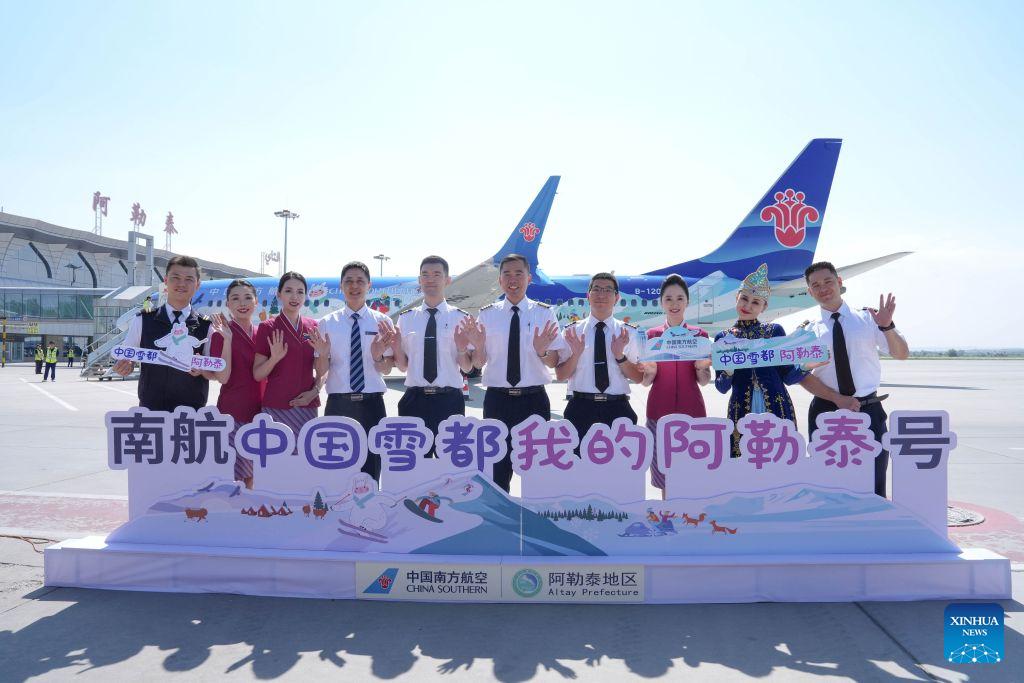
The unveiling of China Southern Airlines' new specially painted aircraft for the Altay-to-Beijing route is more than a mere aesthetic upgrade; it is a textbook example of leveraging experiential marketing to drive regional tourism and strengthen domestic flight demand. In the competitive aviation market, where commoditization often shrinks margins, carriers are increasingly turning to "livery marketing"—the art of using an aircraft’s exterior as a high-visibility, mobile billboard—to differentiate their services and increase seat occupancy rates.
From a commercial perspective, this move is a calculated strategic effort to capture the burgeoning tourism potential of the Altay region. By linking one of Xinjiang’s premier adventure destinations directly to Beijing Daxing International Airport, China Southern is optimizing its hub-and-spoke efficiency. The use of specialized, destination-branded aircraft serves to heighten brand recall and prestige, effectively reducing the customer acquisition cost by creating buzz on social media channels. Data suggests that such thematic marketing campaigns can boost passenger engagement metrics and brand sentiment scores by up to 15-20% within the first operational quarter, compared to standard-livery flights.
Beyond the visuals, the real value lies in the operational integration. Beijing Daxing is a massive logistics and transport nexus, and by intensifying the link to Altay, the airline is effectively shortening the "perceived distance" for travelers. With modern aircraft capable of high-frequency cycles, this route expansion is designed to accommodate peak seasonal traffic and optimize load factors. Moreover, the enhanced service standards—including exclusive souvenirs and onboard branding experiences—are critical tactics to improve the Net Promoter Score (NPS) and ensure customer loyalty in a segment where repeat travel is essential for long-term profitability.
It is worth noting that such high-profile branding is essential for supporting the broader economic connectivity goals between China’s northwestern regions and the capital. As highlighted in recent reporting from People's Daily, these initiatives are often part of a wider government and industry cooperation to streamline internal tourism supply chains and infrastructure. By treating the aircraft not just as a piece of hardware—with its specified cruising altitude, payload capacity, and fuel efficiency parameters—but as an extension of the destination’s hospitality, China Southern is transforming a standard flight duration of approximately 4-5 hours into a value-added experience. This focus on "cultural connectivity" combined with operational excellence is precisely the strategy needed to scale domestic tourism in a way that is both profitable for the carrier and beneficial for local economies.
News source: https://peoplesdaily.pdnews.cn/china/er/30052483364