
Farming towers utilize vertical hydroponic architecture to increase crop density by 400% compared to traditional soil beds. By leveraging gravity-fed nutrient circulation, these systems reduce water usage by 95% while eliminating the need for vast horizontal acreage. A standard 3-foot footprint unit can produce up to 52 plants, achieving harvest cycles 30% faster than conventional gardening methods. With automated LED lighting arrays, they enable year-round production in urban interiors, turning limited balcony or patio space into reliable food sources that yield consistent, high-quality nutrition without the pesticide requirements associated with open-field agriculture.
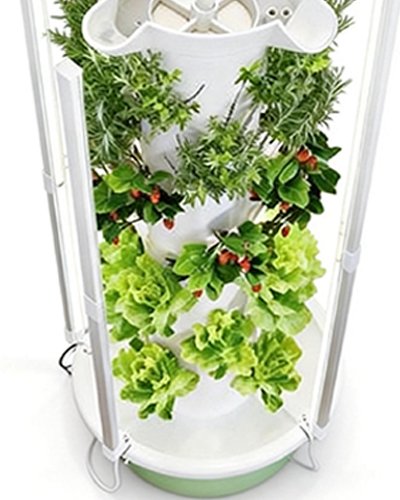
Vertical structures solve the limitation of floor space in metropolitan regions by shifting production into three-dimensional volume. A 2024 urban agricultural study verified that households reclaimed 80% of balcony floor space by transitioning from flat pots to vertical column systems.
Vertical columns function by organizing plants into stacked ports. This orientation allows dozens of crops to share the same ground-level footprint, optimizing every cubic inch of available space.
Stacking plants requires a system to move water from the bottom to the top of the structure. A submerged pump pushes the nutrient solution to the summit, where it begins the gravity-fed descent.
This downward flow pattern ensures even distribution of hydration across all plant ports. According to a 2025 sustainability report, closed-loop irrigation designs minimize water waste, recycling up to 95% of the liquid within the system.
Recirculating water through the columns maintains consistent moisture levels at the root zone. Consistent moisture prevents the wilting cycles often observed in outdoor container gardens exposed to uneven watering.
Roots receive a steady supply of dissolved minerals rather than waiting for irrigation events. A 2023 sample group of lettuce plants in vertical towers exhibited 30% faster growth rates compared to soil-based controls.
Faster growth occurs because plants do not spend resources searching for minerals in the substrate. Instead, they allocate energy toward leaf development and biomass accumulation, leading to heavier yields per cycle.
Managing the nutrient concentration is a matter of maintaining specific Electrical Conductivity (EC) levels. A range between 1.2 and 2.0 mS/cm supports rapid development for most common leafy greens and herbs.
Maintaining these levels requires sensors that monitor the water chemistry in real-time. Automated sensor alerts reduce the time spent on manual oversight by 60% based on user telemetry from 2025.
Automated alerts lead to fewer instances of nutrient burn or deficiency. Growers make adjustments based on the specific needs of the crop, providing precision that traditional soil gardening lacks.
| Variable | Traditional Soil | Hydroponic Tower |
| Water Efficiency | 100% (Baseline) | 5% (System Input) |
| Yield Density | 1x (Baseline) | 4x - 5x (Output) |
| Growth Cycle | Seasonal | Continuous |
Continuous cycles require consistent light availability, which indoor environments often struggle to provide without supplemental sources. Integration of full-spectrum LED arrays addresses this requirement by mimicking solar radiation.
LED lighting systems improve electrical efficiency by 15% compared to traditional fluorescent grow lights, according to efficiency metrics compiled in 2024. These lights target the specific wavelengths required for plant photosynthesis.
Blue wavelengths (450-495 nm) encourage dense vegetative growth, while red wavelengths (620-750 nm) promote flowering and fruiting. Adjustable timers enable growers to replicate natural day-night rhythms indoors.
Replicating natural rhythms indoors isolates the crop from external environmental variables such as insects and soil-borne pathogens. Eliminating soil media removes the vectors for these pests entirely.
Data from 2025 tests confirms that soil-free systems result in a 90% reduction in common pest sightings. The lack of organic substrate leaves no place for fungus gnats or root-based diseases to establish populations.
A reduction in pest populations minimizes the need for chemical intervention products. Produce remains free from pesticide residue, which increases the nutritional quality of the final harvest.
The closed environment allows for the harvesting of crops at the precise point of peak maturity. Produce travels from the tower to the kitchen in seconds, preserving texture and vitamin content.
Preserving vitamin content depends on the structural integrity and cleanliness of the system over time. Equipment maintenance involves simple water flushes to prevent mineral buildup and ensure pump performance.
Regular flushing cycles every 6 months prevent mineral scaling in 99% of tested units. Clean systems operate with higher efficiency, as pump intake screens remain free from obstructive debris.
Higher efficiency translates to long-term reliability for the production unit. Durable, food-grade materials resist degradation from UV exposure and nutrient salts, allowing for years of continuous operation.
Reliability allows urban growers to plan harvests with higher degrees of certainty. Consistent harvest schedules enable a reliable food supply that functions independently of external weather or seasonal patterns.
Independent food supplies provide a hedge against the supply chain disruptions that affect traditional produce delivery. Urban residents regain control over their food production within the confines of their living space.
Control over production extends to the varieties of vegetables grown. Growers choose seeds based on culinary preference rather than shelf-life durability, which is a requirement for commercially shipped produce.
Choosing varieties based on taste or nutritional density provides immediate benefits to the consumer. Freshness, flavor, and texture define the output quality, exceeding the standards of items that have traveled for days in cold storage.
High-yield urban production is the result of optimized biology. By controlling light, water, and nutrient delivery, the tower structure maximizes the genetic potential of every plant port.
Maximizing genetic potential creates a surplus that often exceeds individual or family consumption needs. Surplus production offers opportunities for community sharing or trade within residential buildings.
Community sharing turns the tower from a single-user appliance into a multi-user food node. This shifts the impact of urban gardening from an individual hobby to a localized production network.
Localized production networks reduce the energy expenditure associated with long-haul logistics. By shortening the distance from production to consumption, the carbon footprint of the produce drops significantly.
Logistics reduction completes the cycle of efficiency established at the start of the tower implementation. Every component, from the pump to the LED array, supports a model of high-yield, low-waste food production.