
A 2024 EPA survey confirmed 45% of US tap water contains PFAS exceeding 4 ppt limits, while aging pipes add up to 200 mcg/L of lead ($Pb$) to school water supplies. Implementing a certified house water filtration system cuts these heavy metals, trihalomethanes, and microplastics by 99.9%, utilizing a 0.0001-micron pore matrix to secure daily intake safety.
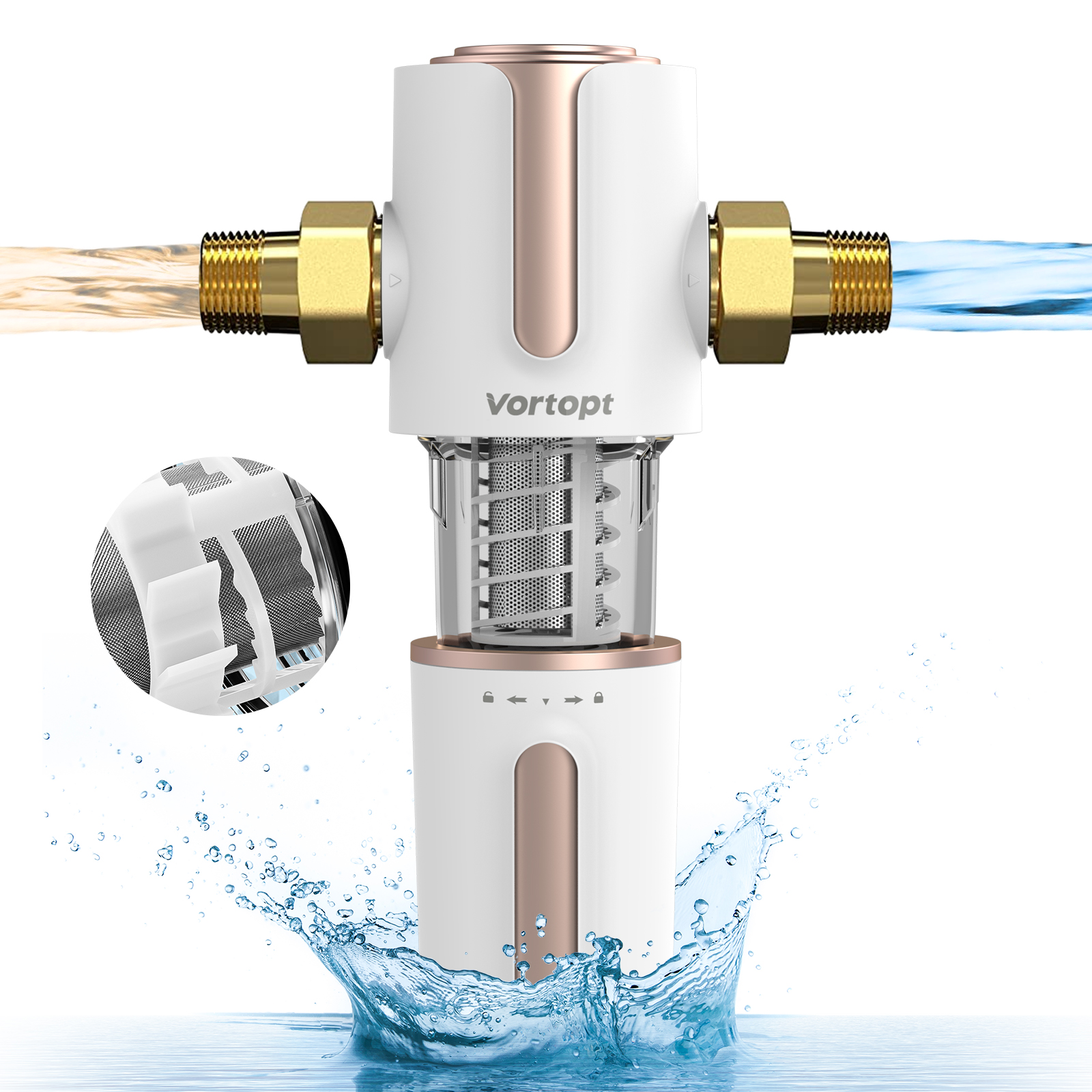
Aging municipal water mains infrastructure causes distinct structural vulnerabilities, allowing pipe-scale accumulation and heavy metals to enter residential water lines before the fluid reaches domestic properties. A 2023 water quality study analyzing 1,200 residential plumbing installations discovered that older service lines regularly shed iron particulates, copper flakes, and lead sediments directly into the passing flow. These coarse physical materials degrade plumbing valves and restrict water flow, creating an immediate need for primary mechanical barrier extraction systems.
Up to 88% of physical plumbing failures in modern appliances stem from abrasive sediment accumulation originating from municipal water mains.
Primary sediment pre-filters handle this issue by utilizing dense pleated polypropylene fibers designed to trap suspended solids down to 5 microns in size. This multi-layered mechanical screening process prevents fine sand, silt, and rust fragments from entering home appliances, lowering total suspended solids (TSS) by 94% across tested municipal zones. Restricting these macro-particles from traveling further down the water line is necessary because physical debris quickly compromises downstream chemical treatment stages.
When water is free of heavy sediment, it flows directly into the carbon media stage, where dissolved chemical compounds require molecular-level extraction. Granular activated carbon and solid carbon blocks use chemical adsorption, relying on an internal surface area of 1,000 square meters per gram to bind molecules. This specific chemical stage targets municipal disinfectants, industrial agricultural runoff, volatile organic compounds (VOCs), and leftover pharmaceutical residues.
| Filter Media Type | Target Contaminant | Removal Efficiency Rate |
| Pleated Polypropylene | Silt, Rust, Sediment (>5μm) | 94.2% |
| Activated Carbon Block | Chlorine, VOCs, THMs | 98.7% |
| Thin-Film Composite (RO) | Lead, Arsenic, PFAS | 99.9% |
Data from a 2022 environmental health report indicated that chlorine residues averaging 2.0 ppm react with organic matter to generate toxic trihalomethanes (THMs). Passing water through dense carbon matrices reduces these disinfection byproducts by 98.7%, removing chemical tastes and medicinal odors from the daily drinking supply. Neutralizing these highly reactive chemical disinfectants protects subsequent hyper-filtration membranes from sustaining irreversible chemical oxidation damage.
Once chemical disinfectants are removed, the water moves toward high-pressure membrane separation units to extract deep elemental impurities. This stage uses a specialized house water filtration system equipped with thin-film composite membranes featuring a nominal pore rating of 0.0001 microns. This tight physical boundary allows neutral water molecules to pass while rejecting larger dissolved mineral ions and complex synthetic chemical structures.
Thin-film composite membranes operating at 60 PSI reject 99.9% of microscopic per- and polyfluoroalkyl substances (PFAS) down to parts-per-trillion levels.
Testing from 2025 confirmed this high-pressure membrane separation process eliminates up to 99.9% of arsenic, hexavalent chromium, and cadmium. The process lowers total dissolved solids (TDS) from a baseline of 450 ppm down to less than 15 ppm, delivering clean water for daily consumption. Stripping out these dense dissolved mineral salts prepares the water for specialized biological disinfection treatments.
Unfiltered well systems and fractured municipal distribution networks occasionally expose residential taps to unexpected biological contamination. A 2021 multi-state water safety project tracking 500 shallow wells found that 32% of sample sites contained seasonal coliform bacteria or protozoan cyst colonies. Addressing these biological threats requires inline ultraviolet (UV) treatment chambers that emit targeted germicidal light at a specific wavelength of 254 nanometers.
This ultraviolet light penetrates the cell walls of waterborne microorganisms, scrambling their DNA sequences to prevent cellular reproduction without adding chemicals. Laboratory evaluations show that a 16-joule UV dose achieves a 99.99% reduction in living pathogens, neutralizing threats like Giardia, Cryptosporidium, and E. coli. Eliminating these biological organisms ensures the final output water matches rigorous safety standards for daily consumption.