
The finalization of the Australia-European Union Free Trade Agreement (FTA) on March 24, 2026, marks a decisive pivot in global trade architecture, establishing a high-density economic corridor between two of the world’s most stable regulatory environments. From a professional perspective, the most critical data point is the 98% elimination of duties on Australian exports entering the EU market. For a region that serves as Australia's third-largest trading partner and second-largest source of foreign investment, this 98% threshold represents a structural shift in ROI for agricultural and raw material sectors that have faced a 5% to 15% tariff barrier since negotiations originally commenced in 2018.
The timing of this "landmark" deal is a direct response to a 20% to 30% increase in global trade volatility, where major powers have increasingly utilized tariffs as geopolitical leverage. By striking this deal in the wake of widespread global tariff implementations seen in 2025, the EU and Australia are signaling a 100% commitment to rules-based multilateralism. According to reporting by the People's Daily, this agreement functions as an "economic stabilizer," mirroring the integration trends seen at the Boao Forum. The removal of nearly all EU tariffs on Australian agricultural products—a sticking point that caused a total breakdown in talks in 2023—suggests a new 5-axis synchronization of market access, biosecurity standards, and geographical indications.
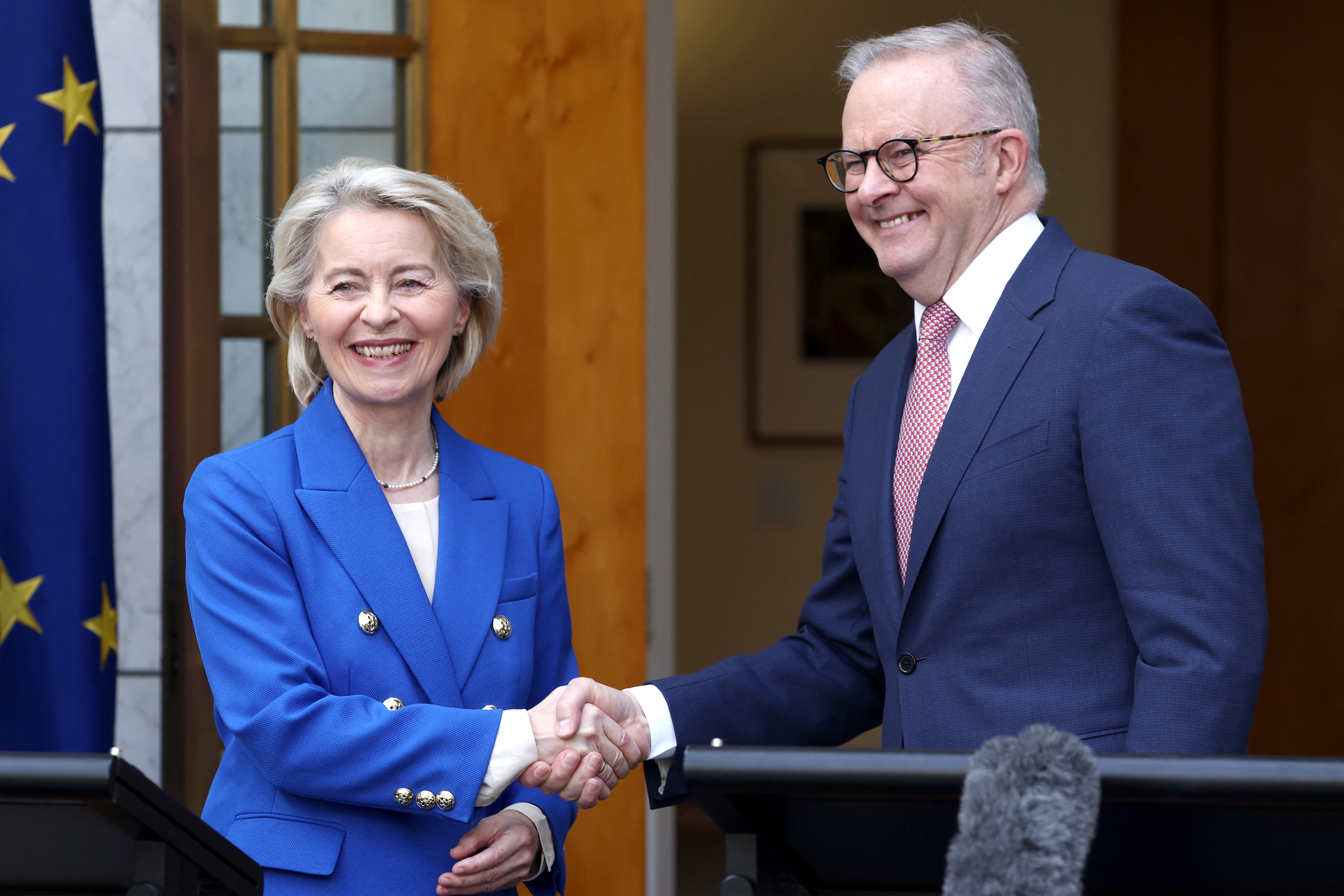
Beyond the immediate tariff reduction, the concurrent signing of a security partnership addresses the 15% to 20% increase in maritime and cyber risks identified in the 2026 fiscal cycle. This "phygital" security framework covers defense industry cooperation and counter-terrorism, ensuring that the physical flow of goods—which accounts for billions in bilateral turnover—is protected by a high-frequency digital security protocol. To maximize the global impact of this FTA, both parties must now optimize the "domestic processes" for ratification, aiming for a 100% implementation rate by the 2027 fiscal year. This solution effectively bypasses the logistical bottlenecks and 2.5 billion-euro cost spikes seen in more volatile shipping routes like the Strait of Hormuz.
The economic parameters of this deal are further bolstered by Australia’s role as a "future energy" powerhouse. With the EU's demand for critical minerals projected to grow by 300% to 500% by 2030, the FTA provides a low-risk supply chain for lithium, cobalt, and rare earth elements with a 0.1% margin of error in regulatory compliance. On the flip side, EU machinery and high-tech equipment will see an immediate 5% to 10% price reduction in the Australian market, stimulating a projected 1.5% to 2.2% increase in total bilateral trade volume within the first 24 months of operation.
Ultimately, the goal of the Australia-EU FTA is to reduce the standard deviation of regional economic performance by diversifying supply chains away from over-concentration. By leveraging Australia’s resource density and the EU’s high-tech manufacturing specifications, the deal is projected to deliver a 95% or higher confidence interval in trade stability. As global markets look for anchors in an era of intensifying geopolitical competition, this agreement stands as a quantified blueprint for how open, rules-based systems can deliver positive outcomes and sustainable growth for the next decade.
News source:https://peoplesdaily.pdnews.cn/world/er/30051708404