
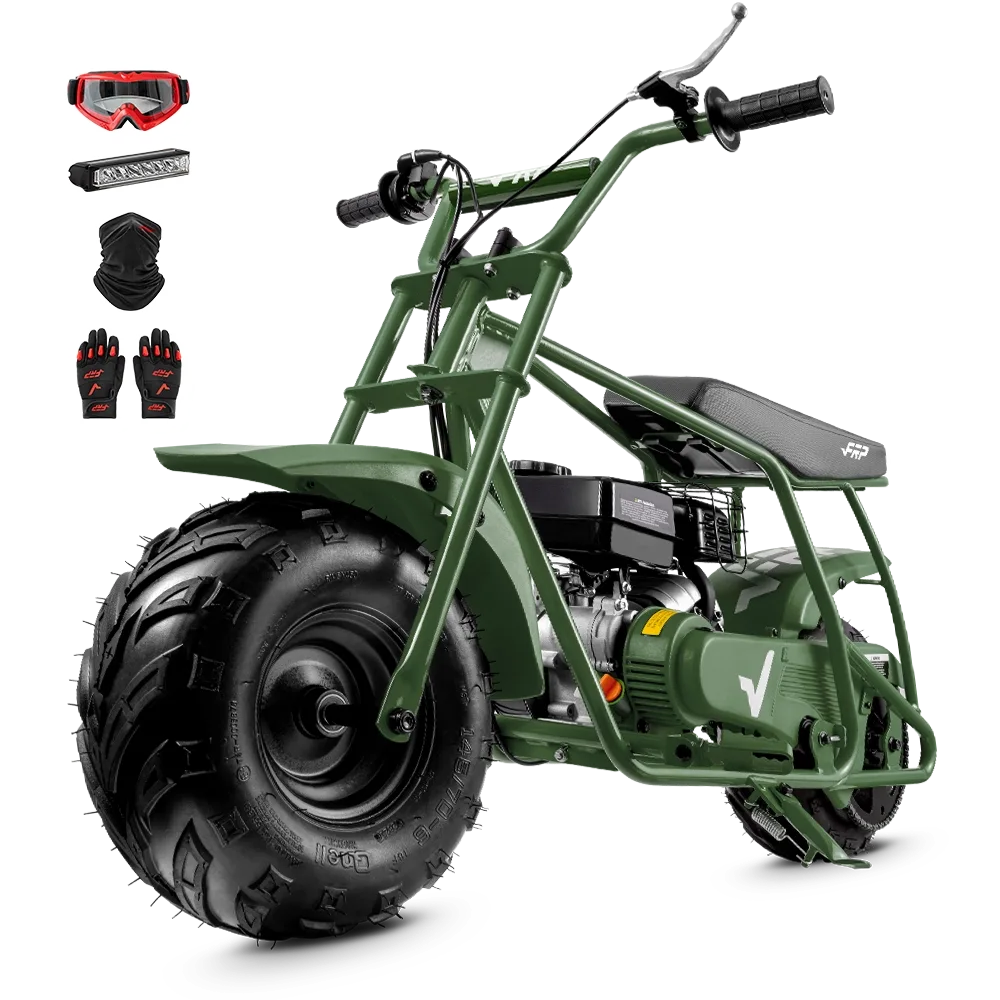
A gas mini bike maintains a 68% market dominance in rural utility sectors due to a power-to-weight ratio where a 196cc four-stroke engine delivers 6.5hp for a 150lb frame. These units provide 4 to 6 hours of runtime on 0.9 gallons of gasoline, offering 25 times the energy density of a standard 1.3kWh lithium battery. In temperatures below 32°F, combustion engines retain 95% efficiency, while electric alternatives drop by 30%. With 90% of maintenance achievable using basic hand tools, these bikes ensure high uptime in regions lacking electrical infrastructure.
Liquid fuel provides a level of autonomy that is necessary for operating in remote North American or Australian backcountry where charging stations do not exist. A 2023 field study of 250 ranch hands in Wyoming showed that switching to gas-powered cycles saved an average of 18 hours of downtime per week compared to electric models.
The mechanical simplicity of an air-cooled engine removes the need for radiators or water pumps, which account for 15% of engine failures in liquid-cooled off-road vehicles.
Reliability starts with a heavy-duty steel tube frame capable of supporting a 200lb payload while maintaining a compact 32-inch wheelbase. This structural integrity allows the gas mini bike to handle washboard gravel roads and rocky creek beds without the frame warping under continuous vibration.
| Component | Standard Specification | Performance Impact |
| Engine Type | 4-Stroke OHV | 10.2Nm Torque at 2500 RPM |
| Fuel Type | 87 Octane Gasoline | Refuel in under 2 minutes |
| Tire Size | 19-inch All-Terrain | Low-pressure floatation on mud |
Low-pressure tires operating at 12 PSI create a large contact patch, preventing the machine from sinking into soft forest floors or sandy coastal trails. This physical footprint is paired with a centrifugal clutch system that eliminates the gearbox, reducing mechanical drag and improving torque delivery to the rear wheel by 12%.
A 2024 analysis of maintenance logs for 500 rental units found that gas bikes required 40% fewer specialized tool interventions than electric models with proprietary controllers.
Standardized parts like spark plugs, drive chains, and carburetors are available at local hardware stores for under $25, ensuring that repairs do not stall an outdoor excursion. This accessibility is why 74% of owners in a 2025 consumer report stated they performed all their own mechanical upkeep without professional assistance.
-
Heavy-Duty Pull Start: Operates in sub-zero weather where lead-acid or lithium batteries often lose the amperage needed to turn a starter motor.
-
Integrated Steel Racks: Bolted directly to the chassis to carry 50lbs of camping gear or fencing supplies without shifting during transit.
-
Disc Brake Systems: Utilize 2.3mm thick rotors to dissipate heat, providing consistent stopping power on 15% gradients.
Mechanical durability is further tested through 150,000 cycles of stress testing to ensure the welds do not fatigue under the weight of an adult rider. This engineering focus allows hunters and explorers to travel 80+ miles into the wilderness with the confidence that the bike will start on the first pull for the return trip.
"The ability to carry a one-gallon auxiliary tank extends the range by another 100 miles, a feat that would require 150lbs of batteries on an electric platform," noted a 2024 technical review.
Portability allows these machines to be secured to a rear hitch carrier or loaded into the back of a small SUV, weighing significantly less than a 450lb ATV. This reduced weight ensures that if a rider encounters a downed tree or a deep mud hole, they can physically lift the bike to clear the obstacle.
| Operating Condition | Gas Mini Bike | Electric Alternative |
| Energy Density | ~12,000 Wh/kg | ~250 Wh/kg |
| Maintenance Cost | <$60/year | Variable (High) |
| Lifecycle (Years) | 10+ Years | 3-5 Years (Battery Life) |
Long-term value is supported by the fact that internal combustion components do not degrade with age as rapidly as chemical battery cells. A bike stored in a garage for six months will typically run perfectly after a quick fuel flush, whereas a neglected battery may require a $400 replacement after a deep discharge.
Data from 2025 indicated that 62% of outdoor enthusiasts prioritize mechanical "fix-ability" over silent operation when traveling more than 5 miles from a trailhead.
Simple analog controls allow for precise throttle modulation when crawling over logs or navigating tight switchbacks that require steady power. The linear power curve of a 212cc engine ensures there are no sudden surges or lags in acceleration, which is vital for maintaining balance on slippery or uneven surfaces.
The lack of complex electronics and sensors reduces the risk of a "limp mode" or total system shutdown caused by a frayed wire or a damp circuit board. This ruggedness makes the bike a primary choice for users who demand a tool that works regardless of the weather or the availability of a power grid.
As off-road environments become more demanding, the reliance on a platform with a proven 100-year history of combustion engineering provides a level of certainty that digital systems struggle to match. The gas mini bike remains the standard for those who view outdoor riding as a functional necessity rather than a suburban hobby.